
You walked into the hospital expecting another day. The case manager just told you your mother is going home tomorrow morning. She still cannot walk to the bathroom on her own. Nobody is home to help. Two words exist for exactly this moment, and most families do not know them: unsafe discharge.
This guide explains what "unsafe discharge" actually means in hospital discharge planning, when to use the phrase out loud, who to escalate to if the first conversation goes nowhere, and how to do all of it without burning the bridge you still need for the next forty-eight hours. Plain language, no shouting.
TL;DR: An "unsafe discharge" is a real term in hospital case management — it triggers a fresh look at whether the home setup, the equipment, the help, and the medical follow-up are actually in place. Say the phrase calmly and in writing. If the team will not budge, ask for the patient-advocate or ombudsman and, for Medicare patients, request a Quality Improvement Organization (QIO) review before discharge.
What "unsafe discharge" actually means
In hospital discharge planning, an unsafe discharge is one where the patient is being sent to a setting that cannot reasonably meet their needs in the days right after they leave. The setting might be unsafe because the home is not ready (no equipment, no railing, an upstairs bathroom only), because the caregiver is not ready (alone, working full-time, eight states away), or because the medical plan is incomplete (no follow-up appointment, no in-home help arranged, a new medication with no one to oversee it).
It is not an opinion. The Centers for Medicare & Medicaid Services (CMS) requires hospitals participating in Medicare to plan for a safe transition out of the hospital — including, for many patients, a formal discharge-planning evaluation. When a family says "this is an unsafe discharge," they are not threatening — they are using the language the system already speaks.
When to say it out loud
Use the phrase when the honest answer to "can your parent be safe at home tomorrow night" is no. Not "I would prefer more time." Not "this is inconvenient." The standard is safety, and the right time to raise it is before the discharge order is written — usually during the discharge meeting, sometimes the day before.
Frame it as a question first, in plain language: "Can you walk me through how the plan keeps her safe tonight — the bathroom, the new medication, who is here when?" If the answers do not add up, follow with the sentence: "From what you have described, I'm concerned this would be an unsafe discharge. What do we need to add to the plan before she leaves?" That is the version that opens doors. The version that closes them is shouting it at the nurse without first checking the plan.
For a longer script of the questions to ask in the meeting — twelve in total, grouped by topic — see What to ask the hospital case manager. The phrasing in that post pairs well with the harder conversation here.
The escalation ladder (in order)
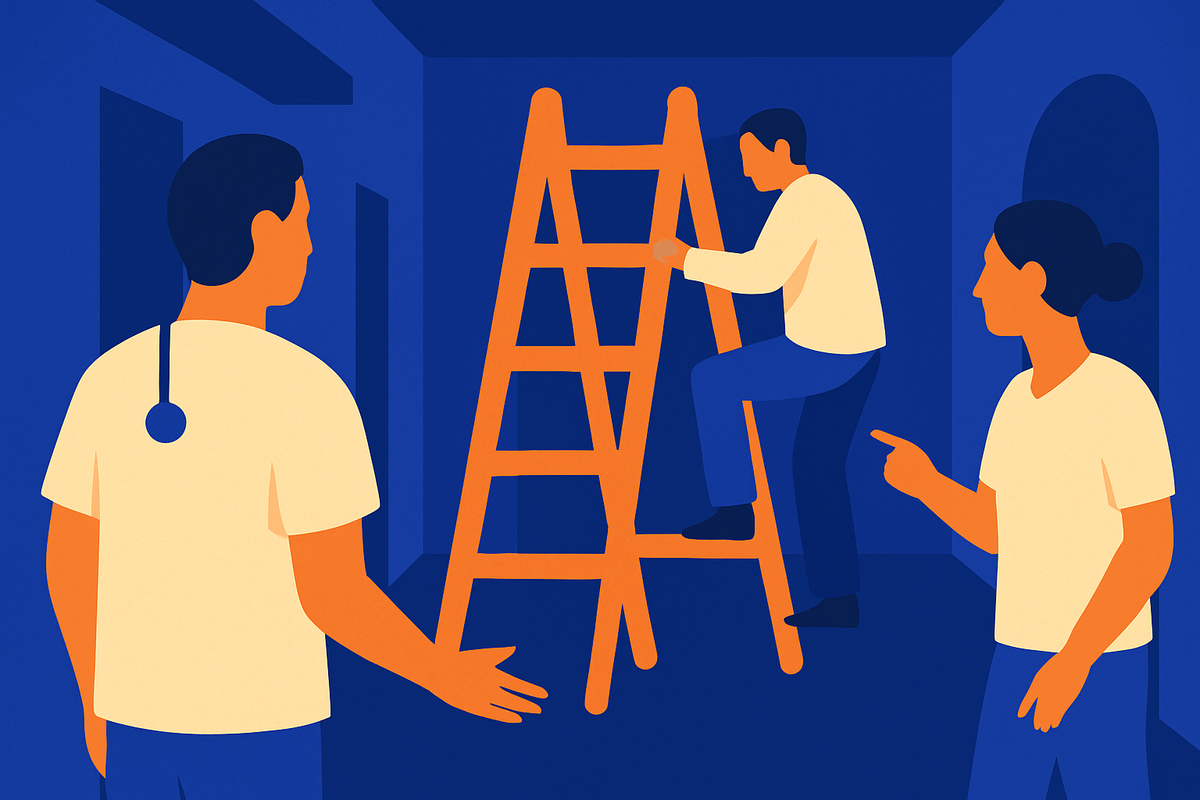
If the first conversation does not result in a real change to the plan, there is a quiet ladder to climb. Each rung exists for a reason; you do not have to start at the top.
- The bedside nurseMost plans soften when a nurse advocates internally. Ask the nurse to flag the safety concern to the charge nurse and the discharge planner together.
- The case manager or social workerTheir job is to coordinate a safe transition. Bring specifics: who is at home, what hours, what equipment is missing, what medication is new.
- The attending physicianThe discharge order is theirs. A direct conversation with the attending often unlocks an extra day, a home-health referral, or an SNF instead of home.
- The patient advocate or ombudsmanMost hospitals have a patient-advocate office or relationship. State long-term-care ombudsmen also handle hospital-to-facility transitions.
- QIO review (for Medicare beneficiaries)Medicare patients can request an expedited Quality Improvement Organization review before discharge. The hospital must provide the QIO contact info in the 'Important Message from Medicare' notice.
- Writing, not yellingEvery escalation works better in writing. A short email to the case manager that names the safety concern, dated and timed, becomes part of the record.
What changes when you say the phrase
Most of the time, the plan changes. The team adds a home-health referral. Physical therapy is scheduled for the day after discharge. The discharge date moves by twenty-four hours so an SNF can be lined up. A family member's flight is taken into account. A bedside commode is ordered. The phrase is not a magic word, but it is a real one — it tells the team you understand the standard and you are asking them to meet it.
Sometimes the plan does not change, and the hospital still discharges. That is when the QIO review (for Medicare patients) or the patient-advocate office matters most. A QIO review pauses the discharge clock long enough for an independent reviewer to look at the plan. It is free, it is your parent's right, and the hospital is required to give you the contact information in writing.
If the discharge is to a skilled nursing facility rather than home, the next decision is which facility — and that decision is usually rushed. When the hospital wants to discharge to a 'nursing home of their choice' is the companion post for that conversation.
Staying calm enough to be heard
The hardest part of an unsafe-discharge conversation is not the legal vocabulary — it is staying in the room. Hospital staff are stretched. The case manager has eight other discharges today. Coming in loud confirms a story they have heard before; coming in prepared changes the story.
Bring one piece of paper with three sentences on it: what is happening today, what you are worried about tonight, and what change to the plan would resolve it. Read the sheet out loud at the start of the conversation. Hand a copy to the case manager. Ask for the case manager's name and the attending physician's name in writing. None of this is theatrical — it is the way to make the safety concern visible in the chart.
For the broader 48-hour playbook this conversation fits inside, see The 48-Hour Hospital Discharge Plan. For the longer pillar of related guides, the Hospital Discharge hub has the full set.
A note on what helps: Aging Sidekick can help you turn the safety concern into a one-page written plan you can hand to the case manager — the bathroom, the medication, the help, the follow-up — built from a calm fifteen-minute voice conversation. It is free to start. We complement, not replace, your healthcare team.
Plan a safe discharge with Aging Sidekick
Aging Sidekick walks you through every question, document, and decision before your parent leaves the hospital — built around the specific care situation in front of you.
Start your discharge planSee how Aging Sidekick helps →