
Heather Todd, CSA, CSA
- clinical care
- care transitions
- medication management
- dementia stages
- hospital discharge
- caregiver workflow
Heather Todd is passionate about helping families find the best care options for their loved ones. She has worked in healthcare for over 20 years, with over a decade devoted to working with older adults. Heather has experience in multiple care settings, including in-home care, 55+ communities, assisted living, memory care, and long-term care. Heather earned her certification as a Senior Advisor to better understand the unique needs and challenges we face as we get older, and uses her combined work experience and training to help people find resources so they can live their healthiest, safest, best lives.
Articles by Heather Todd

Hospital discharge: 12 questions to ask before you leave
A plain-language list of the 12 questions every family caregiver should ask the discharge team — diagnosis, medications, follow-up, equipment, warning signs, and who to call after hours.
Anosognosia: when your parent doesn't know they're sick
Anosognosia is the word for a particular kind of unawareness — a parent whose brain literally cannot recognize the disease. It is not denial and it is not stubbornness. Here is the plain-language guide, and the conversation moves that work better than logic.

Anticipatory grief: mourning who your parent used to be
Anticipatory grief is the long, quiet grieving that begins before the loss — common in families caring for a parent with dementia. Here is the language for it, what other families have found steadying, and why the grief is not a sign you are doing something wrong.

What to put in a dementia 'go-bag' for ER visits
ER visits with a parent who has dementia are harder than ER visits without. A pre-packed 'go-bag' on the closet shelf saves an hour at the door and an evening of trying to remember what year a medication was started.

Alzheimer's, vascular, Lewy body, frontotemporal: how to tell them apart
Dementia is an umbrella term, not a single disease. Here is the plain-language guide to the four most common types — Alzheimer's, vascular, Lewy body, and frontotemporal — what each one looks like at home, and why the difference matters for the care plan.

Driving and dementia: the conversation no one wants to have
Driving is one of the hardest conversations after a dementia diagnosis — it is independence, identity, and routine all in one. Here is what to consider, what families have tried, and how to keep the conversation about safety without making it about the parent.

How dementia changes the family — and how to keep the family
A dementia diagnosis does not arrive at one person — it arrives at a family. Here is the plain-language look at what families often notice changing in the first year, the recurring fault lines between siblings, and the habits that keep a family together.

Sundowning at 2 a.m.: what's happening and what to try first
Sundowning is the late-day or middle-of-the-night confusion that many families with a dementia parent come to dread. Here is what is happening, what families often try first that helps, and what to mention to the doctor when it does not.

How to talk to a parent in denial about their diagnosis
When a parent will not accept the dementia diagnosis, every direct conversation tends to make it worse. Here is what other families have found useful, the conversation moves to consider, and why 'winning the argument' is rarely the goal.

What stage of dementia is my parent in?
Families often ask 'what stage are we in?' looking for a roadmap. Here is what the common dementia-staging frameworks actually describe, what they cannot predict, and how to use stages without letting the label run the family's life.

How to advocate for your parent without becoming the difficult family member
Advocacy at the hospital is a skill, not a personality. Here are the small phrases, the meeting habits, and the written-record discipline that get the team to listen — without painting yourself as the difficult one in the chart.

After the ER: the first 24 hours at home
ER discharges happen fast and the instructions are usually thin. Here is the first-24-hours plan for the family bringing a parent home from the emergency department — what to ask before you leave, what to set up tonight, and when to call back.
When the hospital wants to discharge to a 'nursing home of their choice'
Sometimes the hospital case manager hands you a printed list of nursing homes and asks the family to pick one — today. Here is what that phrase actually means, what your rights are, and how to slow the choice down without delaying discharge.

Home health vs. SNF vs. acute rehab: which one does my parent need?
After a hospital stay, the discharge team will name one of three next stops: home with home-health visits, a skilled nursing facility (SNF), or an inpatient acute-rehab unit. Here is what each one actually does, what Medicare covers, and how to tell which one fits.
Medicare's 3-day rule for rehab, explained for caregivers
Medicare only covers skilled-nursing-facility rehab after a qualifying inpatient hospital stay. Here is the 3-day rule in plain language, why 'observation status' can disqualify a stay, and how to verify the status before discharge.
Reading the discharge summary: a line-by-line walkthrough
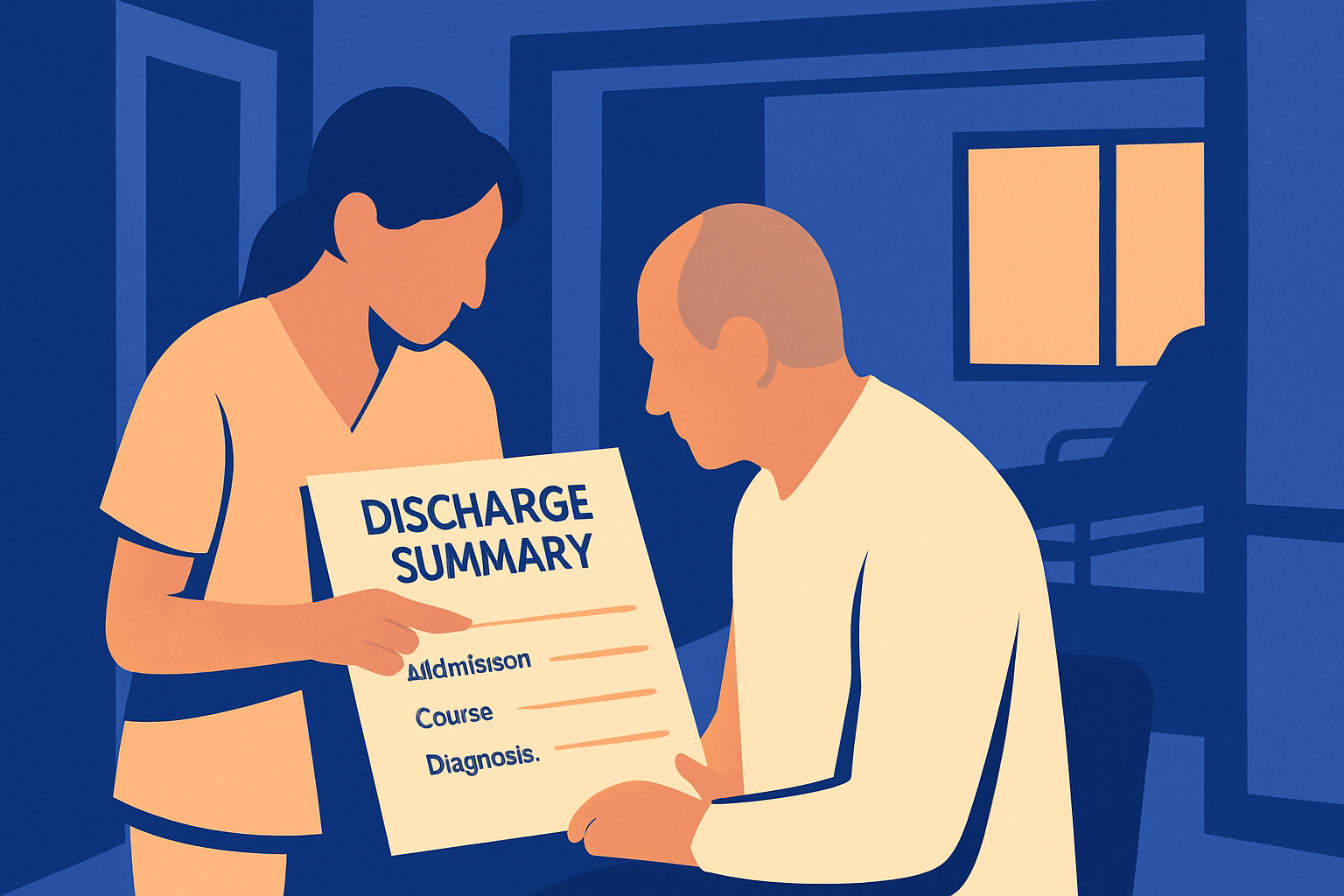
The discharge summary is the multi-page packet you get on the way out of the hospital. It looks like a legal contract written in medical shorthand. Here is a section-by-section walkthrough — what to read first, what to circle, and what to ask about before you leave.

What is an unsafe discharge — and how to refuse one
An "unsafe discharge" is a real term in hospital discharge planning. Here is what it means, when to use it out loud, and the calm script that slows the room down without making you the difficult family member.

What is medication reconciliation — and why your parent's list is wrong
Medication reconciliation is the process of matching the pills your parent actually takes against the list the hospital sends home. It is also the single most common place that hospital discharges go wrong. Here is how to run it yourself, in plain language.

What to ask the hospital case manager (a script)
A printable script of the questions to ask the hospital case manager (or discharge planner) before your parent leaves the hospital — diagnosis in plain English, medications, equipment, follow-up, and who to call after hours.
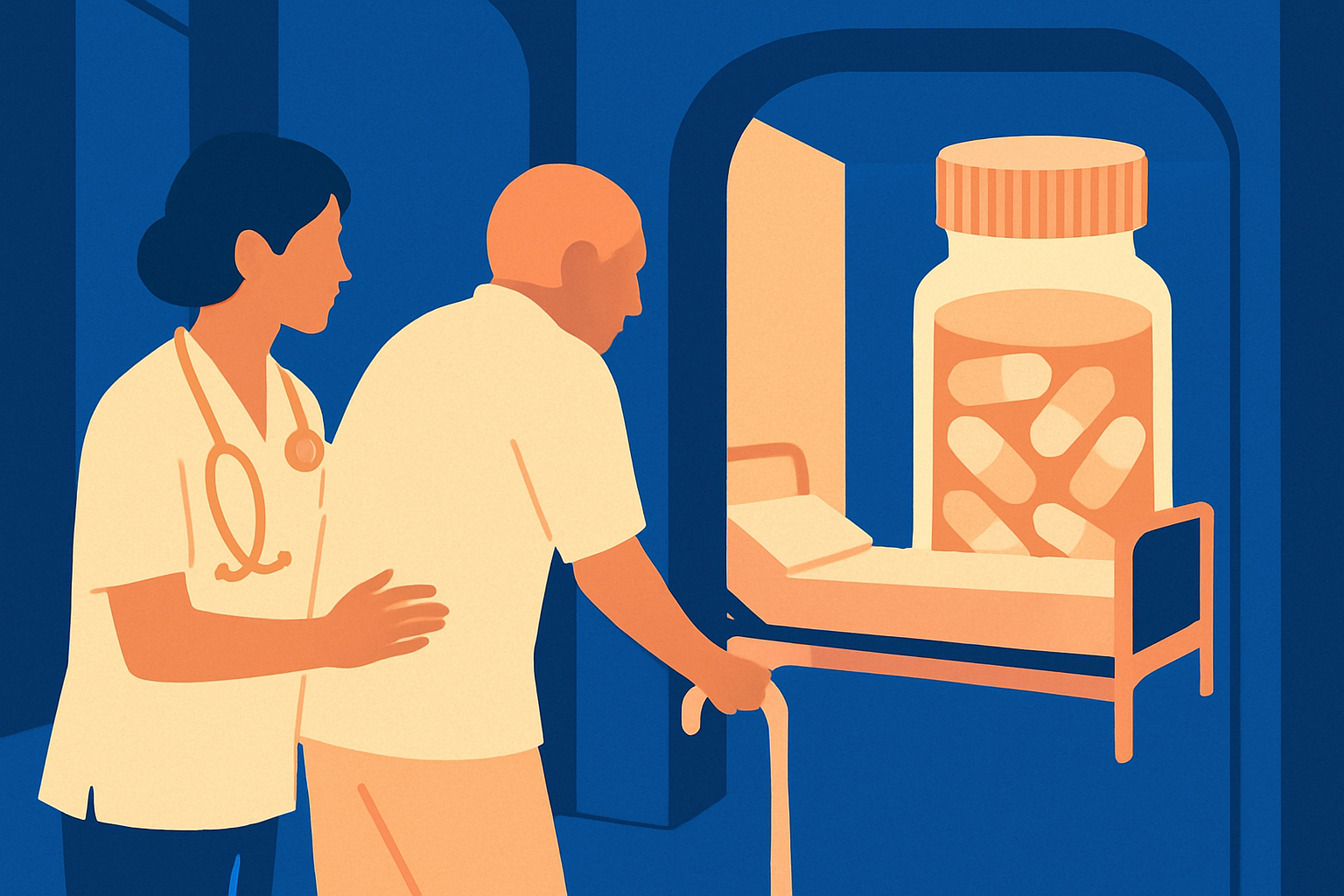
Why hospital readmissions happen — and how to prevent the next one
About one in five older adults is readmitted within 30 days of a hospital stay. Most readmissions follow the same three failure patterns — medication errors, missed follow-up, and warning signs caught too late. Here is how to spot each one early.

Hospice vs. palliative care: a plain-English explainer
Hospice and palliative care are often used interchangeably and they are not the same. Here is the plain-language difference, what each one is actually for, who pays, and how to know when it is time to ask a doctor about either.

How to ask your employer for caregiver leave
Most working caregivers underuse the leave their employer already offers — sometimes because they do not know it exists, often because they do not know how to ask. Here is the short tour of FMLA, paid family leave, and the calm script for the conversation with your manager and HR.

The call from the neighbor: what to do in the first hour
The first hour after the unexpected call about your aging parent is where long-distance caregiving either holds together or unravels. Here is the calm playbook for what to ask, who to call, what to write down, and what not to decide yet.

The five Zoom-friendly check-ins that beat one chaotic visit
A single visit every few months almost always becomes a chaotic visit. A small, predictable cadence of short video calls almost always becomes the relationship that sustains long-distance caregiving. Here is the five-call rhythm that works for most families.

Hiring a geriatric care manager: when, why, how much
A geriatric care manager — sometimes called an aging life care manager — is the on-the-ground coordinator long-distance families cannot be. Here is what they actually do, when it is worth hiring one, what fees look like, and how to find a credentialed one near your parent.

How to run a family meeting about caregiving (with agenda)
A scheduled, structured family meeting — same week each month, a printed agenda, written notes after — is the single most useful coordination tool a long-distance care team has. Here is the agenda that works, the roles to assign, and the conversations to keep off the call.

Setting up a 'when something happens' file for your parent
Every long-distance caregiver eventually wishes they had built one document before they needed it. The 'when something happens' file exists so the first thirty minutes of a crisis are spent on the crisis, not on a search for the cardiologist's number. Here is what to put in it, where it lives, and how to keep it current.

The medication review every senior should get every year
Once a year, every older adult on three or more medications benefits from a structured medication review — a sit-down where someone with a clinician's eye looks at the whole list together. Here is what the review is, who can run it, and how the family prepares.

Why your parent's blood pressure med might be too aggressive
Blood-pressure targets that worked at fifty are not always the right targets at eighty-five. Here is the plain-language guide to why over-treatment is common in older adults, what to track at home, and the questions to bring to the next doctor visit.

How to read a pharmacy bottle (and what the codes mean)
A pharmacy bottle holds more information than most families realize — the drug name, the strength, the dosing schedule, the prescriber, the refill window, the warning stickers, and the small codes that tell you whether this is the same medication as the one in last month's bottle.

How to use MyChart without losing your mind
MyChart is the patient portal a majority of U.S. health systems use, and it is both the family caregiver's best friend and a frequent source of frustration. Here is the practical tour — how to get access for a parent, what to use it for, and what to give up on.

Medication side effects that look like dementia (but aren't)
Some medications produce confusion, memory loss, or new agitation that looks for all the world like dementia — but is reversible when the medication changes. Here is the plain-language tour of the categories families and clinicians watch for, and how to surface the question with the doctor.

Pill organizers, automatic dispensers, and what actually works
The shelves are full of pill organizers, locked dispensers, and app-connected gadgets. Here is the honest tour of what each kind actually does, who it tends to work for, and how to match the tool to the parent rather than the marketing.

Switching from Medisafe? Here's what changes.
Medisafe is a long-running medication-reminder app many families have used for years. In January 2026 Medisafe moved most of its core features behind a paid subscription, prompting many families to look at alternatives. Here is what changes when you switch, the data you should export first, and what to look for in a replacement.

The Beers List: medications older adults shouldn't take
The Beers Criteria is the geriatrics field's plain-language consensus on which medications carry extra risk for adults over sixty-five. Here is what the list is, what it is not, and how to bring it into the next appointment without making the doctor defensive.

What is polypharmacy — and why it's dangerous after 75
Polypharmacy is the medical term for taking many medications at once — and it is the single most common medication-safety issue for adults over seventy-five. Here is what the term actually means, why the risk climbs with age, and the questions to bring to the next doctor visit.

When to push back on a new prescription
A new prescription is rarely just a new bottle — it is a small but real change in the medication picture, and it sometimes deserves a calm second question before the parent starts taking it. Here is when to push back, how to push back without offending the prescriber, and the four questions that surface the answers families need.

The 48-Hour Hospital Discharge Plan for Aging Parents
A plain-language 48-hour plan for the days around a hospital discharge — what to do before the discharge meeting, how to read the paperwork, how to set up the home, and how to navigate the first two weeks to prevent a readmission.

The First 30 Days After a Dementia Diagnosis: A Family Playbook
A 30-day playbook for the family of a parent who has just been diagnosed with dementia or Alzheimer's — what to do in the first 48 hours, who to build into the care team, the legal and financial paperwork to start now, and how to talk to siblings, extended family, and the parent themselves.

The Caregiver's Guide to Managing Your Parent's Medications
A plain-language guide for the family caregiver who has become the unofficial medication manager — how to build the master list, run an annual review with the doctor, pick the right daily dosing tool, decode a pharmacy label, spot side effects that look like dementia, and keep the list right through a hospital stay and a dementia diagnosis.

The Long-Distance Caregiver's Operating Manual
A field manual for the adult child caring for an aging parent from another time zone — what to do in the first hour after the call from the neighbor, the remote-care toolkit to build before you need it, the 'when something happens' file, a family-meeting agenda, when to hire a geriatric care manager, how to communicate with the local care team, the five Zoom check-ins that beat one chaotic visit, and how to take a real vacation.
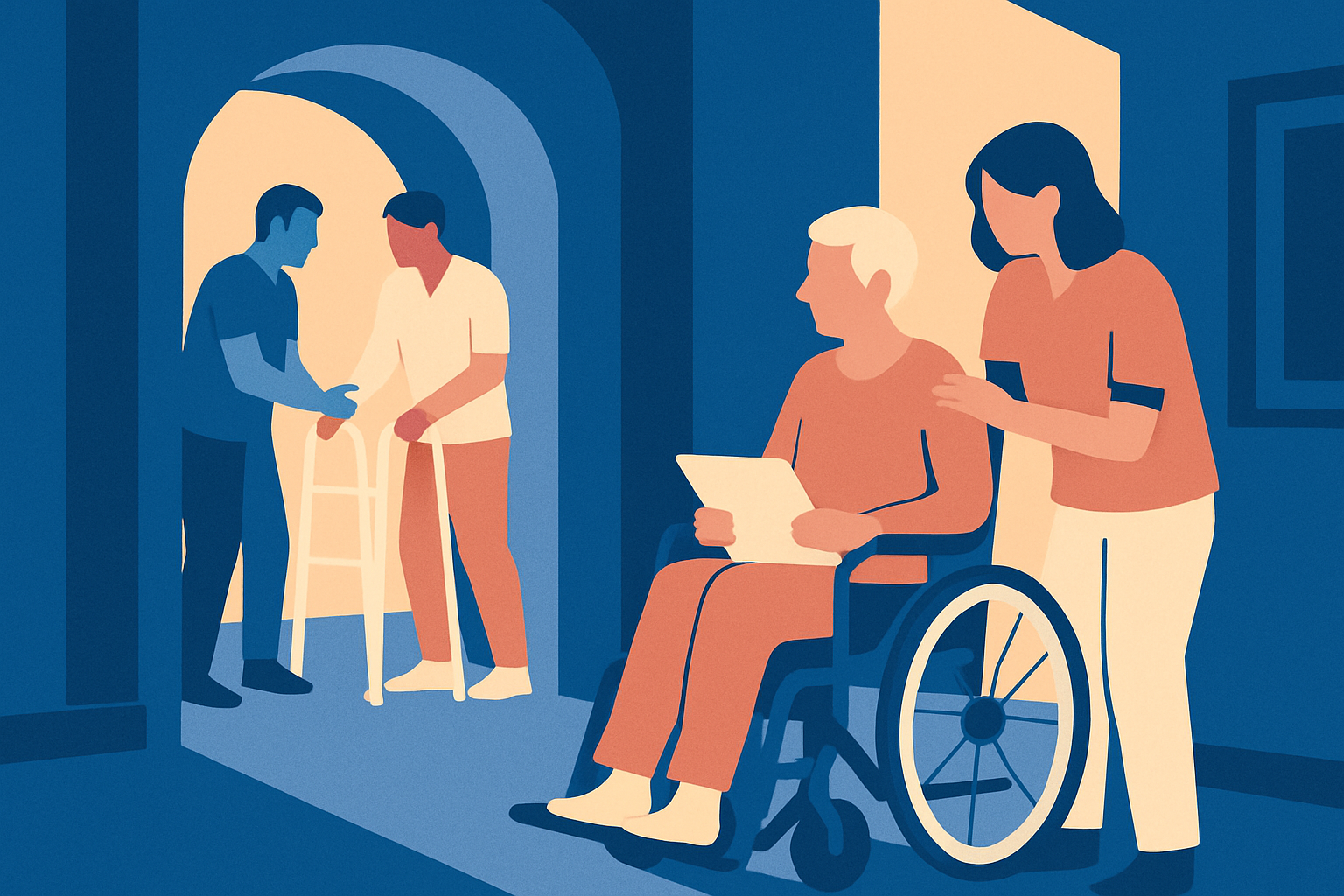
Understanding the Differences: Occupational Therapy vs. Physical Therapy for Older Adults
Learn how occupational therapy and physical therapy differ in their focus, techniques, and goals, and discover which may be right for you or your loved one.

Dementia vs Alzheimer’s: Understanding the Different Types of Dementia
Many people use 'dementia' and 'Alzheimer’s' interchangeably, but dementia describes a range of conditions—including Alzheimer’s disease. This post explains th…

Doing These Three Things After a Rehab Stay Will Help You Stay Safe and Healthy at Home
There are a few key things that can help you be your healthiest and safest when returning home after a hospital or rehab stay. These tips and resources will he…

How AI Is Transforming Life for the Elderly: Real-World Innovations & Everyday Benefits
Explore the many ways artificial intelligence (AI) is revolutionizing elder care in 2024, from health and independence to companionship and safety. Discover th…